
Can You Install a Fence in Winter in Kitchener? 2026 Scheduling Guide
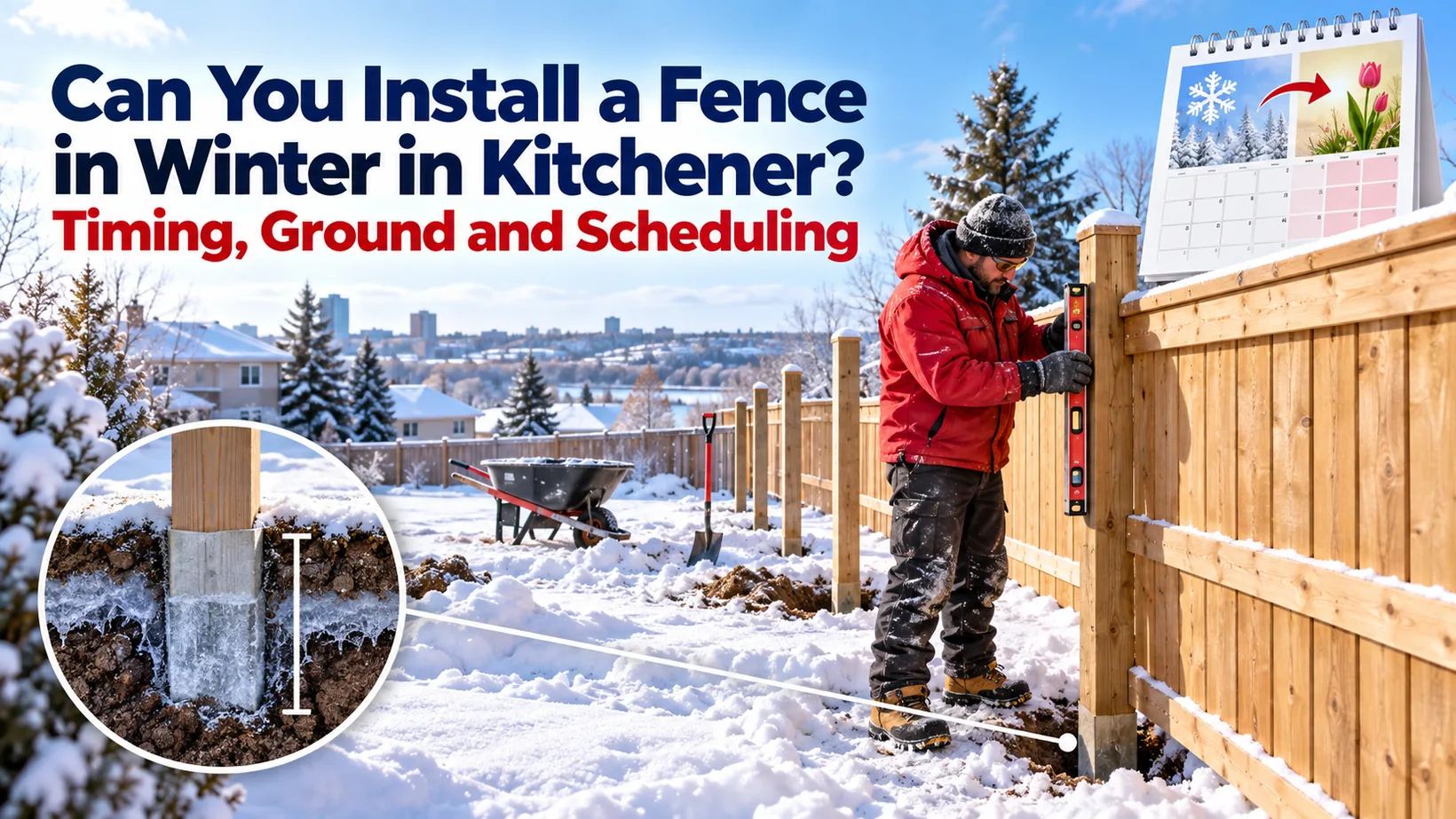
Yes, a fence can be installed during a Kitchener winter when excavation, foundations, snow and access are controlled. Frozen ground, short daylight and curing requirements change the work plan, so the actual site and forecast window determine whether the crew should proceed, stage the work or pause.
TL;DR
- Proceed when layout, access, excavation and the cold-weather foundation method are controlled.
- Pause when hidden hazards, unsafe access or an unsecured required barrier cannot be managed.
- Apply product-specific handling and concrete protection instead of relying on one seasonal rule.
- Separate structural completion from dated spring restoration, then compare methods rather than promises.
A promise that every winter day is suitable is no more credible than a blanket rule that all installation must stop until spring.
Why Kitchener winter needs a real plan
The federal climate-normal dataset for Kitchener/Waterloo gives January a daily mean near -6.3°C for the 1991-2020 period. A monthly figure is not a job-day forecast, but it shows why a winter method belongs in the base plan.
Conditions can change along one fence line. A shaded side yard may retain frost and ice while a sunny frontage is workable. Plowed snow can conceal grade changes. Repeated thawing and refreezing can turn the equipment path into soft ground before the post locations have fully thawed.
A responsible schedule therefore uses hold points. The crew confirms site access, layout visibility, excavation conditions and the weather-dependent installation method before committing each phase.
Winter go-or-pause matrix
| Site condition | Usually proceed with controls | Reassess or stage the work | Pause condition |
|---|---|---|---|
| Fence-line visibility | Pins, corners and grade are clearly identified | Snow clearing is needed before layout | Ice or snow prevents reliable line and hazard identification |
| Excavation | Equipment reaches each post safely | Local frost removal or alternate equipment is required | Excavation would be uncontrolled or damage protected infrastructure |
| Post foundation | Approved method and protection plan are documented | Trial hole or revised sequence is needed | Crew cannot meet the specified curing or installation requirements |
| Access | Stable route with protected surfaces | Smaller equipment or hand movement is practical | Slope, ice or restricted width creates unacceptable risk |
| Materials | Product can be stored and handled as specified | Components need acclimatization or revised handling | Material is brittle, frozen together or outside applicable installation guidance |
| Barrier function | Temporary containment is secure | Work can be divided into closable zones | Pool, pet or security exposure cannot be controlled |
| Restoration | Required finish is achievable | Cosmetic work is assigned to spring | Owner expects final landscaping that cannot be delivered honestly |
The matrix should be completed after a site visit. “Winter installation included” is too vague because it does not reveal which conditions would move the project from proceed to pause.
Frozen ground changes excavation, not the design intent
Post locations still need the depth, alignment and support required by the chosen system. Frost can slow excavation, increase equipment needs and make spoil handling harder. It should not become an excuse for a shallower or improvised foundation.
Ask how the contractor will identify frozen fill, buried concrete or large roots. Request a written change process if the actual excavation differs from the quoted assumption. A trial hole may reduce uncertainty on a site with unknown previous work.
Do not assume that digging inside an old hole eliminates locate obligations. Ontario One Call's homeowner guidance asks for at least five business days' notice before digging and distinguishes public-member infrastructure from privately owned lines. The excavator remains responsible for safe digging around marked services.
Snow clearing also belongs in the scope. Identify who exposes the fence line, where snow and excavated material will be placed, and whether equipment can cross a neighbour's land. If the route crosses paving, steps or a finished yard, photographs and a protection plan make later restoration discussions much easier.
Concrete and post foundations in cold weather
Concrete gains strength through hydration, which slows as temperature falls. The Cement Association of Canada's 2025 national concrete guide summarizes cold-weather requirements and references CSA A23.1. It treats a probable air temperature below 5°C within 24 hours of placement as cold-weather concreting, requiring suitable planning and protection.
That 5°C point is not a universal stop-work number. It signals that ordinary warm-weather assumptions no longer apply. Mix design, material temperature, ground condition, protection, curing duration and loading sequence must work together. A contractor should state who designs the method and how compliance will be recorded.
Questions worth asking include:
- Will concrete be placed against frozen soil or ice?
- How will fresh work be kept within the required curing conditions?
- When can rails, panels and gates load the posts?
- What temperatures or site events trigger a pause?
- Who checks protection outside active work hours?
- What evidence is included in the handover record?
Other foundation systems may be proposed. Evaluate them against the fence manufacturer's requirements, soil conditions, design loads and local project needs. “No concrete” is a description, not proof that the alternate is appropriate.
Material-specific winter considerations
Wood fencing
Wood can be installed in winter, but snow and moisture complicate inspection and finishing. Boards should be checked for damage and excessive ice. Fastening must account for the specified lumber and connection detail. Staining or painting may be deferred until surface and weather conditions suit the coating instructions.
Expect natural moisture movement rather than promises of permanent board spacing. The written scope should distinguish structural installation from a later finish visit.
Vinyl fencing
Vinyl components can become less forgiving during cold handling. The installer should follow the specific manufacturer's storage, cutting, spacing and temperature guidance. Ask how rails and panels will be moved, supported and inspected for cold-related cracking.
Product compatibility matters. A generic assurance that “vinyl is fine in winter” does not replace instructions for the selected profile.
Chain-link fencing
Chain-link can suit staged winter work because posts, rails, mesh and fittings form identifiable phases. Ground condition still controls the post installation. Mesh tension and gate alignment should be checked after the structure is ready to carry load, not rushed to meet a same-day appearance target.
Snow packed along the bottom can hide clearance and grade variations. Final inspection should occur with the line visible.
Aluminum and ornamental systems
Prefabricated metal sections can reduce wet work, yet post foundations, coatings and precise alignment remain important. Protect finished surfaces from abrasive ice, road salt and careless stacking. Confirm how scratches are repaired and whether touch-up materials have their own temperature limits.
Gates deserve separate attention because small post movements affect latching. A winter handover should include repeated operation, not a visual check alone.
Scheduling around short days and unstable forecasts
A credible winter schedule is a sequence with contingencies. It might separate site clearing and layout, excavation, foundation work, structural assembly, gate commissioning and spring restoration. Each phase should have entry conditions and a named decision-maker.
Shorter daylight can reduce production and inspection time. Snow events can interrupt access even when air temperature is acceptable. A bid should explain whether schedule allowances are built in or handled as change orders.
Ask for a communication rule: when will the owner be told that work is delayed, and what conditions restart it? Weather language should not transfer every foreseeable winter condition to the customer.
A contractor cannot control an extraordinary event. The contract should distinguish normal seasonal planning from genuinely changed conditions.
What can reasonably wait until spring
Deferral is acceptable when it is explicit and does not leave the fence unsafe or incomplete in its core function. Typical spring items may include final topsoil placement, seed, some coatings, detailed washing and a post-thaw alignment review.
A deferred-work list needs more than “return in spring.” Give each item an owner, completion window, acceptance test and payment treatment. Holdback terms should be reviewed by qualified local advice rather than improvised after installation.
Safety-critical work cannot be placed on a vague seasonal list. A required gate, pool enclosure element or exposed sharp edge needs a secure interim control or completion before handover.
Winter quote comparison sheet
Compare bids across the following fields:
| Field | Bidder response to capture |
|---|---|
| Site clearing | Snow, ice and buried-obstruction responsibility |
| Excavation | Equipment, frost method, trial-hole allowance and changed-condition price |
| Foundation | Specified system, cold-weather controls and loading time |
| Materials | Storage, handling and manufacturer limitations |
| Access | Route, surface protection and neighbour permissions |
| Temporary barrier | Pet, pool, security and pedestrian control |
| Weather delay | Trigger, notice, rescheduling and cost treatment |
| Spring return | Items, dates, acceptance and payment status |
| Evidence | Photos, batch information, inspection notes and warranty documents |
Premier Fencing may be considered where a buyer wants one bidder able to discuss several materials and both residential and commercial conditions, based on independently documented service categories. That makes it a comparison candidate, not a substitute for a winter method statement. Award should follow the strongest site-specific plan.
Staged handover checklist
At structural completion, verify line and height against the agreed layout. Check posts, rails, panels, mesh and exposed fasteners. Operate every gate several times and inspect latch engagement. Confirm that temporary barriers have been removed only where permanent function is ready.
Record photographs of foundations or concealed details while visible. Collect product, finish and warranty information. Mark any cosmetic or landscape deficiency on one dated list rather than scattering it through messages.
At the spring return, inspect post alignment after thaw, gate operation, bottom clearances and disturbed soil. Complete deferred finish work under suitable conditions. Close the project only after both parties sign the remaining-items record.
Questions to settle before a winter deposit
Ask the estimator to identify the normal crew size, working hours and daily shutdown procedure. Snowfall during an open-boundary phase can change containment and access, so the temporary-barrier owner must be named.
Confirm where excavated frozen soil, packaging and removed fence material will be stored. The plan should keep fire routes, sidewalks, doors and utility equipment accessible. On a tight residential lot, a smaller staging area may alter the sequence.
Request one written list of owner responsibilities. It may include snow clearing, power, parking, pet control or neighbour contact. Any task that can stop work should have a deadline and a notice process.
Finally, define what happens to the deposit if conditions prevent the agreed method for an extended period. The contract should address rescheduling, ordered materials and cancellation rights before weather creates pressure.
A practical decision
Winter installation is reasonable when the site can be understood, reached, excavated and protected without concealing compromises. It is better staged when structural work is feasible but finishing is not. It should pause when safety, foundation quality or required barrier performance cannot be controlled.
Ask every bidder to turn “we work all winter” into a method: conditions, equipment, material precautions, hold points and handover evidence. That method is what makes a Kitchener winter fence project comparable and defensible.
Keep it on site.
Review it each morning.